Black Friday Cyber Monday (BFCM) 2026 is coming — and the stakes have never been higher.
BFCM set a formidable benchmark. Triple Whale tracked $2.88 billion in revenue across 33,000 shops during the four-day event.
But that demand will be harder to capture. Promotions are starting earlier, competition is intensifying, and shoppers have more offers to sort through. Ecommerce brands need a sharper advertising plan to earn attention without sacrificing profit.
In this advertising guide, we’ll outline some insights from BFCM 2025, what we learned, and some strategies for tackling BFCM 2026.
Insights from BFCM 2025
BFCM 2025 reinforced that the event is bigger than a four-day weekend. Ecommerce brands saw demand build before Black Friday and continue through Cyber Monday.
In the week before BFCM, Triple Whale shops generated $1.77 billion in revenue and recorded 16.6 million orders, proving consumers buy early when deals appear. What this means for advertisers is that November is no longer a warm-up period. It’s part of the main campaign.
The customer mix changed, too. New customer revenue accounted for 48% of total revenue, down from 59.71% in BFCM 2024.
BFCM 2025 by the numbers
In the Triple Whale BFCM 2025 Retrospective Report that investigated the ad performance for over 33,000 brands, we found that during BFCM 2024:
| Metric |
BFCM Result |
| Revenue tracked |
$2.88 billion |
| Orders recorded |
26 million |
| Ad spend |
$607 million |
| Average order value (AOV) |
$79.18 |
8 advertising strategies for BFCM 2026
The 2025 results point to a longer promotional window and more pressure on every ad dollar. These eight strategies can help ecommerce brands prepare for BFCM 2026 without rebuilding their entire playbook.
1. Craft engaging short-form video content
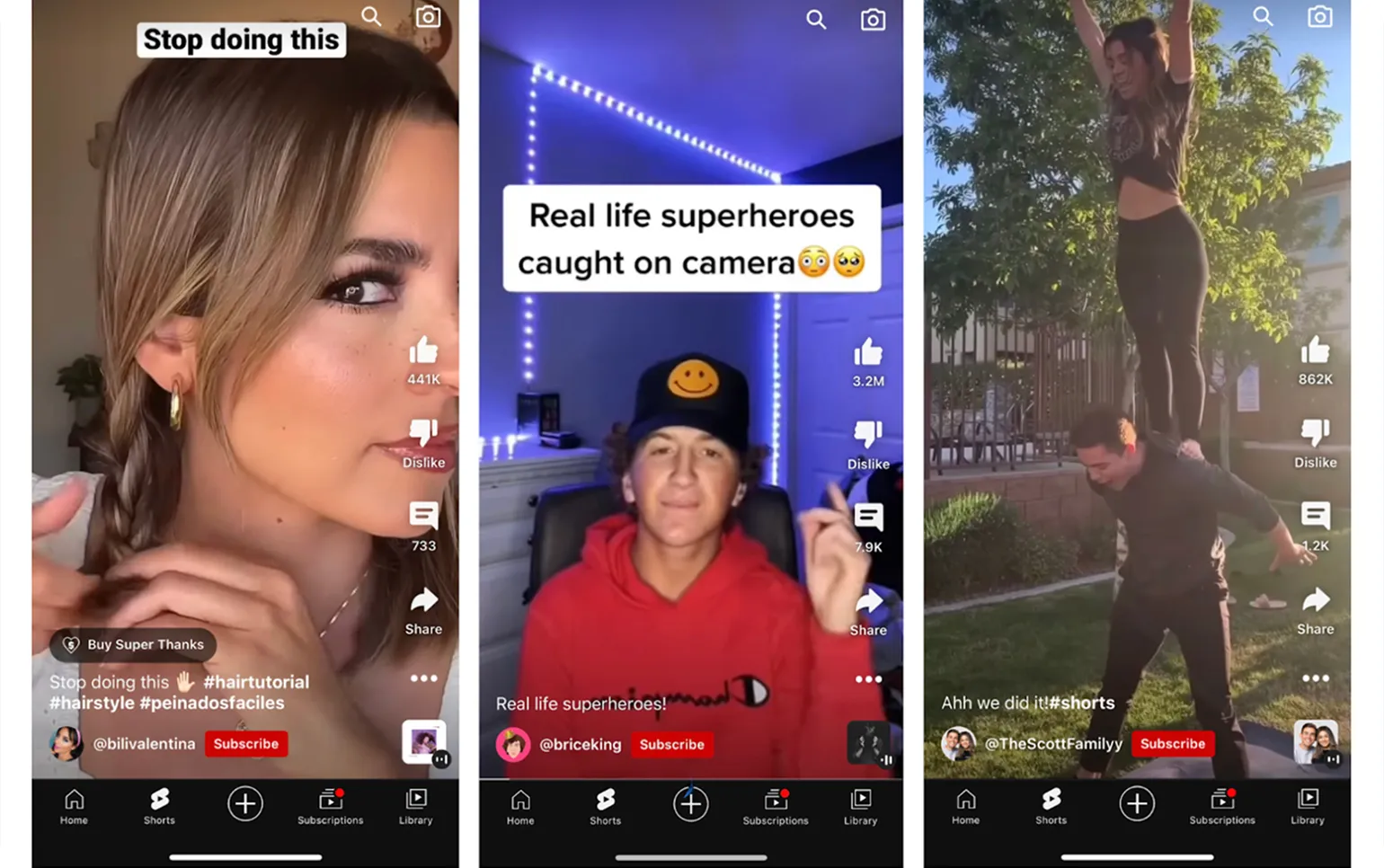
Platforms like TikTok, Instagram Reels, and YouTube Shorts remain central to how shoppers discover products. During BFCM 2025, Meta Reels generated $184 million in revenue across Triple Whale brands. TikTok’s platform reported return on ad spend (ROAS) rose 28.42% year over year while cost per thousand impressions (CPM) fell 27.5%.
Here are a few reasons why short-form video content works for ecommerce brands:
- Attention-grabbing: Short-form video lets brands lead with their strongest product moment before a shopper scrolls past.
- Accessible & Entertaining: The format makes product benefits easy to understand without asking viewers to commit to a long video.
- Storytelling ability: A focused video can move from the customer’s problem to the product’s payoff in seconds.
- Relatable: User-generated videos and creator collaborations can feel more credible than polished ads.
- Influencer partnerships: Creators can demonstrate products and answer questions while a BFCM offer is live, adding urgency to the purchase decision.
Short-form creative should lead into a mobile-first shopping experience. Salesforce reported that about 70% of Cyber Week 2025 orders came from mobile devices. Send shoppers to the product page featured in the ad, and make sure it loads quickly on mobile.
2. Drive deeper connections with personalized incentives
When new customers land on your website during BFCM, you know they’re hunting for deals. But what you do next determines whether they come back.
Personalized product bundles
Start by getting to know your customer through first- and zero-party data. One valuable way to collect that information is with a post-purchase survey that digs deeper into where the customer discovered you and what influenced the purchase.
Use the data gathered to generate AI-driven insights for which products are most likely to be purchased together by that specific customer, creating a bundle that is truly aligned with individual customer needs.
Loyalty programs that go beyond the discount
You can turn a deal seeker into a repeat customer by extending rewards beyond BFCM. Store credit or early access to a product launch can encourage the next purchase without repeating the same discount.
Model the reward against contribution margin before launch. Adding another incentive can reduce margin when the offers are stacked.
3. Emphasize product value and longevity
Many shoppers are paying closer attention to what they buy and how long it will last. BFCM messaging should explain why the product is worth the investment instead of relying on the discount alone.
Highlight the quality and longevity of the product. Show the feature or material that makes it useful over time. For apparel or higher-priced goods, a cost-per-wear example can make the long-term value easier to understand.
Discount strategies and messaging
Customers know that BFCM now stretches beyond four days. In the week before BFCM 2025, Triple Whale shops generated $1.77 billion in revenue and recorded 16.6 million orders.
Plan a clear offer sequence for the promotional period. Keep discounts consistent enough to avoid confusing shoppers, then reserve the strongest urgency language for the final deadline.
4. Lean into evergreen ads, but add a BFCM twist
As we look ahead to BFCM 2025, one thing is clear: ad spend is set to outpace last year. What’s interesting is the shift we’re expecting in creative strategy. Instead of seeing tons of new formats, brands will lean on what's already working — evergreen ads with a simple Black Friday Cyber Monday twist.
Our mantra for this year? If you’re early, you’re on time. Pre-BFCM 2025 spend reached 65% of the actual weekend spend. Launching earlier gives the team more time to identify which creative and offers are working.
We’re also predicting that many brands will get creative with inventory, offering "gift with purchase" deals to clear stock through Christmas. The real action will happen between November 9th and December 19th, when the best offers will likely be exhausted.
5. Don’t sleep on static ads for BFCM 2026
Short-form video may draw attention, but static ads remain a reliable choice for BFCM 2026 for a few reasons:
Cost-effective
Static ads are typically cheaper to produce and run than video ads, which is especially beneficial during BFCM when advertising costs are higher due to higher competition. Static ads can help a brand maintain a presence without exceeding their advertising budget.
- Simple and clear: A great way to deliver a straightforward message quickly during BFCM! During this period, shoppers are often bombarded with multiple promotions. A well-designed static ad with a clear call-to-action can cut through the noise and immediately convey the deal, which can increase the likelihood of conversions.
- Quick loading times: Static ads load faster than video or animated ads, which is important for maintaining a seamless customer experience. Faster load times can reduce bounce rates and keep customers engaged, especially on mobile devices where the majority of shopping occurs during BFCM.
- Retargeting efficiency: Since static ads can be easily personalized to remind past visitors of products they viewed or added to their cart, they can be especially effective for retargeting campaigns.
- Wide reach and compatibility: Static ads are compatible across all platforms and devices, which means they can be easily integrated into various advertising platforms and formats, ensuring the campaign reaches a broad audience without any technical issues.
6. Make customer lifetime value (CLV) and ROAS a top priority
While BFCM is the busiest shopping event of the year, it’s wise to think about how to nurture new customers acquired during this time to make the most of the remaining months of the year.
It’s all about what happens after the click. Are shoppers browsing more than one product? Where are they dropping off? Brands that track and act on these post-click behaviors will be able to optimize in real-time and outperform the competition. The consumer journey is getting more complex, and if you’re only looking at surface metrics, you’re missing the full picture.
Focusing on maximizing Customer Lifetime Value (CLV) means a brand is identifying and prioritizing acquiring high-value customers who are more likely to make repeat purchases. When running ads, ROAS is a great metric for measuring how effective advertising campaigns are.
When competition and ad costs are high during BFCM, optimizing for a great return on ad spend can enable a business to allocate resources to the most effective campaigns to maximize returns.
Long-term profitability is important, and running and managing your ads with a view of CLV and ROAS can ensure you have a comprehensive view of ads to ensure future sustainable growth.
7. Set up Buy Now, Pay Later (BNPL) options
Buy Now, Pay Later (BNPL) can make a purchase easier to manage during the holiday season. Adobe reported that BNPL passed $1 billion in financed spend on Cyber Monday 2025. Mobile accounted for 79.4% of those U.S. transactions.
For customers, BNPL spreads the cost over time instead of requiring the full amount at checkout. That flexibility can be useful for higher-priced products or larger gift purchases.
For the business, platforms like Klarna and Afterpay can offer another payment option without requiring the brand to manage the installment plan itself. Review provider fees and settlement terms before launch.
8. Use cross-channel attribution tools to run better ads
Advertising isn’t happening in just one channel, which is exactly why a cross-channel attribution tool is necessary to see the big picture.
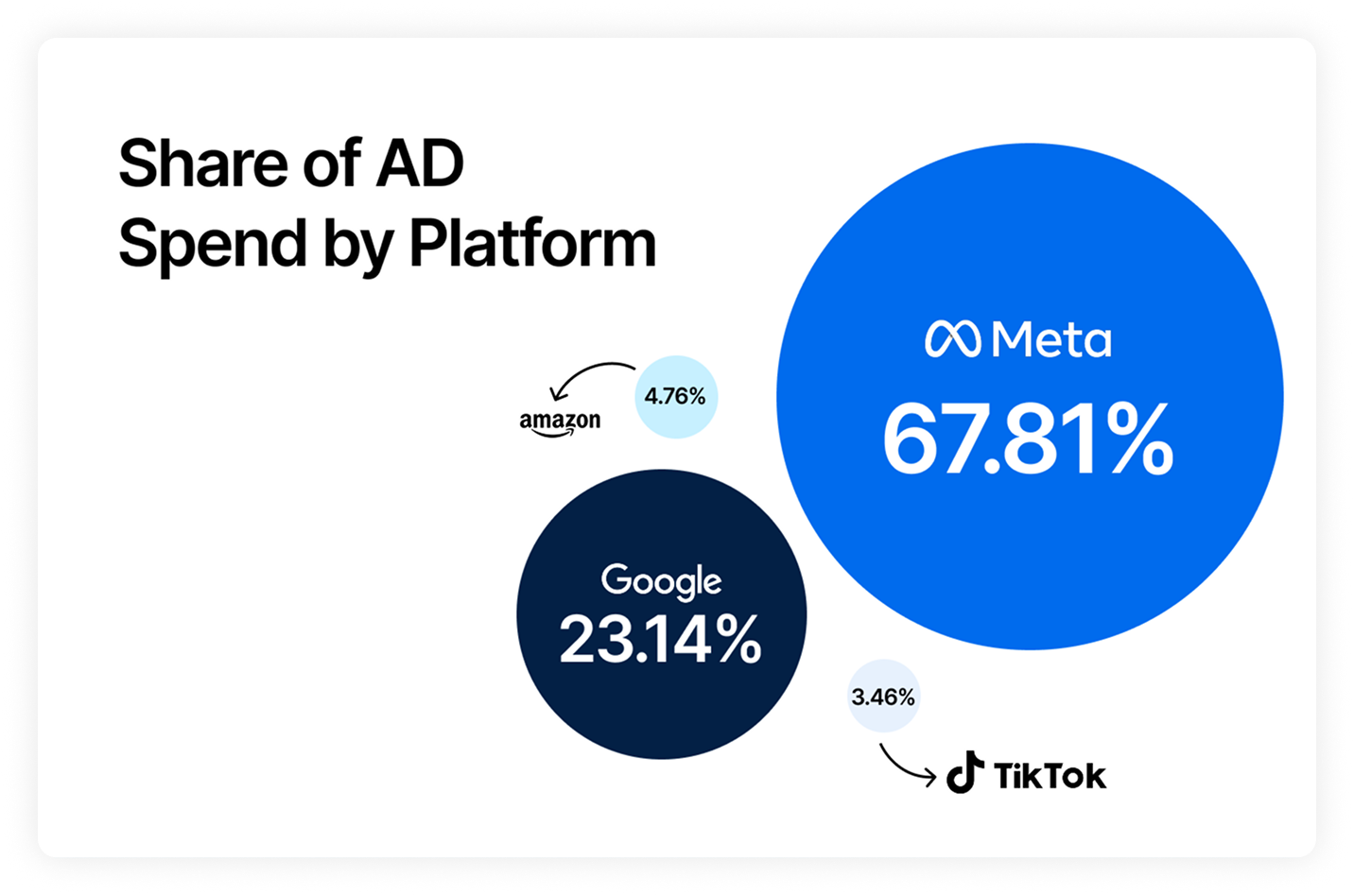
Meta captured 67.6% of BFCM ad spend in Triple Whale’s same-shop analysis, the largest share on any platform. A cross-channel view helps teams compare that performance with the rest of the media mix.
Platform-reported metrics can give more credit to the platform reporting the conversion. Use one primary attribution model throughout the event so results remain comparable.
If Google product ads or Performance Max campaigns play a major role, compare their impact with the rest of the journey instead of relying on Meta’s view alone. If Meta is a primary channel, confirm that the Conversions API is configured before the promotion begins.
Triple Whale brings paid and owned channel performance into one source of truth. Its attribution models connect customer touchpoints to revenue, helping teams see how each channel contributes to a conversion. That clearer view supports more confident budget decisions without relying on any single platform’s version of performance.
Turn insights into action this BFCM
BFCM 2026 will be another high-stakes opportunity for ecommerce brands. With the right mix of data-driven insights, strategic advertising, and current consumer trends, teams can navigate the challenges of peak season.
The strategies in this guide reinforce the importance of early preparation, engaging short-form content, personalized offers and loyalty incentives, and cross-channel attribution. Used together, these tactics can help brands maximize BFCM sales and build lasting customer relationships that support long-term growth.
Ready to crush BFCM 2026? Book a demo to see how Triple Whale can help your team put these insights into action.
Black Friday Advertising Guide FAQs
Why is short-form video content so important for BFCM advertising?
Short-form video helps ecommerce brands communicate product value quickly in the crowded feeds where shoppers discover new products. During BFCM 2025, Meta Reels generated $184 million in revenue across Triple Whale brands, while TikTok’s platform-reported ROAS rose 28.42% year over year and CPM fell 27.5%.
Should brands still use static ads during BFCM, or focus entirely on video?
Brands should use both formats. Video can demonstrate a product and build interest, while static ads can communicate an offer at a glance or remind shoppers about products they already viewed. Test each format across placements, then use performance data to decide where to invest.
Why should DTC brands prioritize CLV and ROAS during BFCM?
BFCM brings in a surge of new customers, and focusing on Customer Lifetime Value ensures you are acquiring buyers who are likely to return well beyond the sale weekend. Tracking ROAS alongside CLV helps you allocate budget to the campaigns delivering the strongest long-term returns, not just short-term spikes.


 Moby AIAsk questions, analyze performance, and work with your business context.
 ActionsTake governed action across the tools that run your business.
 AutomationsSchedule recurring analysis and work that runs on your terms.
 Landing PagesCreative conversion-focused ecommerce pages with Moby.
 Creative StudioGenerate and refine creative grounded in your brand.










.webp)

.webp)
