Your brand’s conversion rate is the percentage of your visitors or users who complete a desired action on your website or app. It’s one of the important ecommerce metrics marketing professionals and business owners monitor to track performance.
The action you want visitors to take might be making a purchase, signing up for a subscription, downloading your ebook, or any other way in which you want them to become a customer.
Whatever your desired action is, knowing what constitutes a “good” conversion rate is essential for measuring the success of your marketing and sales efforts. And once you calculate where you stand, you can invest in conversion rate optimization for even better results.
Below, learn how to find your conversion rate, how to determine if it's good, and how you can improve it.
How do I calculate my conversion rate?
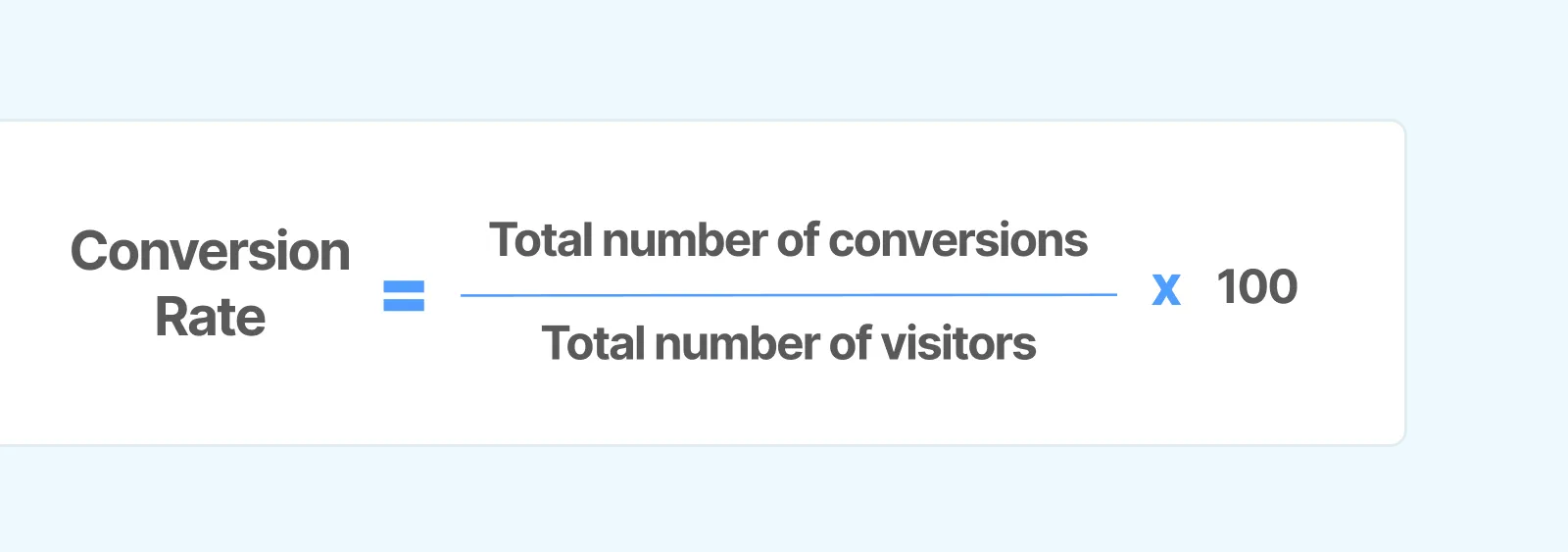
There’s a simple formula for finding your conversion rate:
Conversion rate = (total number of conversions / total number of visitors) x 100
For example, if your website has 50,000 visitors and 1,500 of those convert (aka complete your desired action), then you’ll have a website conversion rate of 3%.
What is a ‘good’ conversion rate?
That brings us to the million-dollar question: What is a good sales conversion rate? There is no universal answer for every brand and industry. Online conversion rates can vary greatly depending on the size of your business, your offerings, and the field you’re in.
The average conversion rate for online shops in 2025 is 1.8%, according to data from marketing platform IRP Commerce. Marketing professionals will often say somewhere between 2% and 5% is a good conversion rate for ecommerce. Triple Whale brands averaged a 2.04% conversion rate over the past year.
If you are converting at or above that 1.8% average, then you’re on pace for growth. If you’re lower than that number, like 1%, it might be considered a bad conversion rate. It's critical to make improvements as quickly as you can. (More on how to do that below!)
If you run a Shopify store, a good website conversion rate would be anything above 3.2%. That would put your business in the top 20% of all Shopify stores, according to the platform. And if you’re above 4.7%, you’d have a high conversion rate among the top 10% of Shopify stores. (For context, it’s unlikely you’d see very high conversion rates of 20% or 30%.)
But don't get too comfortable even if you have a healthy conversion rate and you’re outperforming your competitors. There is always room for improvement! You can make a significant difference in revenue by increasing your conversion rate just by 0.5%.
Comparing conversion rate benchmarks by industry
While many businesses find their conversion rates land somewhere in that 2% to 5% range, it can be helpful to get a little more specific. We analyzed the average website conversion rates by industry among Triple Whale brands between Sept 1, 2024 and August 31, 2025. This should provide a clearer picture of your own success or where you might have room for improvement.
Apparel & Accessories: 1.81%
Health & Beauty: 2.56%
Home & Garden: 1.65%
Food & Beverage: 2.74%
Sports & Outdoors: 1.71%
Toys, Art & Collectibles: 1.91%
Consumer Electronics: 1.68%
Health & Wellness: 2.02%
Pets & Animals: 2.46%
Baby: 2.27%
Automotive: 1.54%
Media & Publishing: 1.69%
Books & Music: 1.99%
So if you’re wondering “What is a good conversion rate for ecommerce?” you can compare your business’s conversion rate to the average for your industry. “Good” would be above these averages.
Comparing against your own past performance
Another way to measure your conversion rate is to track it over time. Most advertising and analytics platforms will allow you to easily track your conversions, including Google Ads, Google Analytics, Facebook Ads, and more.
Start regularly tracking and reviewing your conversion rate to identify what’s working and what isn't. Ideally, you’ll see steady improvement over time as you implement tactics that improve conversion rate.
Factors that influence conversion rate
When you’re thinking about your own ideal conversion rate, you have to keep in mind that various elements affect this metric.
As you can see from the industry-specific conversion rate benchmarks above, the category you’re in can play a role in conversion rate. For example, as you can see from the IRP Commerce data above, health and wellbeing sites typically result in higher conversion rates than electronics, so you can't compare apples and oranges. Similarly, a good Etsy conversion rate also depends on your industry, price point, and offerings.
That may be at least partly related to the price of your products and services. Typically, higher-priced items produce lower conversion rates, while lower-priced ones see higher rates.
This makes some amount of intuitive sense. A big purchase like a laptop takes more consideration, meaning a customer is more likely to shop around rather than purchase after a click. Adding reviews goes a long way in encouraging conversions for higher-priced items, according to research from Northwestern’s Spiegel Research Center. (That said, this doesn’t mean cutting prices will always boost your conversion rates.)
Variables on your website also affect conversion rate. For example, mobile optimization, site navigation, UX design, page load time, copywriting, SEO, and forms can significantly influence how many people take action.
The traffic channel through which your visitors find you and the type of device they’re using may also affect their likelihood of converting. While mobile conversion rates used to typically be lower than laptop or desktop conversion rates, according to the American Marketing Association, more sales are now happening on mobile devices, per IRP Commerce. And more conversions come from paid search, direct, and email traffic than other sources, according to IRP Commerce.
How to benchmark your own performance
You don’t just calculate your conversion rate once and move on. To really learn from conversion metrics, you’ll want to monitor your performance over time. There are a few best practices for doing so:
Set a consistent reporting window. Monitoring your conversion rate monthly is likely the most helpful approach if you want to uncover actionable takeaways that may help you improve your conversions. Checking in weekly is typically only helpful in identifying issues with your online shop. Yearly reporting can be useful for big-picture analysis of your overall marketing performance.
Focus on overall trends, not fluctuations. The reason we don’t recommend monitoring conversion rate weekly is because short-term dips don’t always reflect the long-term pattern or trend of your profitability.
Segment by traffic source. Google Analytics is one of the most popular tools for measuring online conversion rates, and it makes segmenting your conversions simple. You can categorize conversions by traffic channels like organic, paid, social, referral, email, and more. Knowing this granular data allows you to track your performance over time by channel and make the necessary adjustments to reach your conversion goals.
Use annotations in tools or notes to keep track of changes. GA and other tools often also have features that allow you to annotate important moments in time you want to monitor. For example, maybe you unveiled a site redesign on June 15 or launched a specific campaign on February 1. With notes reminding you of these key changes, you’ll be able to easily compare your conversion rate before and after these moments.
4 first steps to take to improve your conversion rate
Now that you have a grasp on conversion rates, it's time to consider practical methods of improving yours. This process is called conversion rate optimization (CRO), which essentially entails optimizing your website, landing page, and other elements to encourage more conversions. CRO helps your company work with the traffic you already have to increase ROAS and overall profitability.
There are lots of ways to optimize your conversion rate. Here are a few of the classic strategies to start with — and you can find many more in our comprehensive guide to the best CRO tips of 2025.
1. Add testimonials and reviews
Even if someone likes your business, they may not make a purchase if it looks like they’re the first person to try your product. Including testimonials and reviews from other customers on your product pages can help put their minds at ease.
2. Include CTAs
Make sure relevant product pages, landing pages, and SEO content have clear, actionable calls-to-action (CTAs). Put a little extra effort into making your CTA copy stand out and attract interest.
3. Try A/B testing
A/B tests entail using CRO software to establish two different variants of a webpage, headline, or creative and spreading your traffic between them. Half of your traffic will be directed to variant A, while the other half goes to variant B. This is a quick and efficient way to test ideas and see which versions drive more conversions.
4. Streamline your sales funnel
Remove obstacles that discourage conversions and make it easy for users to complete the customer journey.
Make sure landing pages are attractive and informative. Offer something of value like free ebooks, whitepapers, or tutorials. Communicate with potential customers regularly to keep them engaged but not too often that you turn them off. Entice users with offers that are hard to turn down, such as discount codes and free trials. Keep iterating on this process to improve conversion rates.
Conclusion
Your conversion rate tells you how many users complete a desired action on your website, like making a purchase. A “good” conversion rate varies by brand and industry, but the general average for online stores is around 2%. Whatever your conversion rate is, improving this metric can go a long way in boosting your bottom line.
Monitor your conversion rate monthly and look for opportunities to improve it with conversion rate optimization for long-term success. Triple Whale makes it easy with sophisticated web analytics and Moby Agents that spot opportunities across your entire site to drive more conversions. Book a demo today!
Component Sales
5.32K
Benchmark your ecommerce brand against industry leaders
Your brand’s conversion rate is the percentage of your visitors or users who complete a desired action on your website or app. It’s one of the important ecommerce metrics marketing professionals and business owners monitor to track performance.
The action you want visitors to take might be making a purchase, signing up for a subscription, downloading your ebook, or any other way in which you want them to become a customer.
Whatever your desired action is, knowing what constitutes a “good” conversion rate is essential for measuring the success of your marketing and sales efforts. And once you calculate where you stand, you can invest in conversion rate optimization for even better results.
Below, learn how to find your conversion rate, how to determine if it's good, and how you can improve it.
How do I calculate my conversion rate?
There’s a simple formula for finding your conversion rate:
Conversion rate = (total number of conversions / total number of visitors) x 100
For example, if your website has 50,000 visitors and 1,500 of those convert (aka complete your desired action), then you’ll have a website conversion rate of 3%.
What is a ‘good’ conversion rate?
That brings us to the million-dollar question: What is a good sales conversion rate? There is no universal answer for every brand and industry. Online conversion rates can vary greatly depending on the size of your business, your offerings, and the field you’re in.
The average conversion rate for online shops in 2025 is 1.8%, according to data from marketing platform IRP Commerce. Marketing professionals will often say somewhere between 2% and 5% is a good conversion rate for ecommerce. Triple Whale brands averaged a 2.04% conversion rate over the past year.
If you are converting at or above that 1.8% average, then you’re on pace for growth. If you’re lower than that number, like 1%, it might be considered a bad conversion rate. It's critical to make improvements as quickly as you can. (More on how to do that below!)
If you run a Shopify store, a good website conversion rate would be anything above 3.2%. That would put your business in the top 20% of all Shopify stores, according to the platform. And if you’re above 4.7%, you’d have a high conversion rate among the top 10% of Shopify stores. (For context, it’s unlikely you’d see very high conversion rates of 20% or 30%.)
But don't get too comfortable even if you have a healthy conversion rate and you’re outperforming your competitors. There is always room for improvement! You can make a significant difference in revenue by increasing your conversion rate just by 0.5%.
Comparing conversion rate benchmarks by industry
While many businesses find their conversion rates land somewhere in that 2% to 5% range, it can be helpful to get a little more specific. We analyzed the average website conversion rates by industry among Triple Whale brands between Sept 1, 2024 and August 31, 2025. This should provide a clearer picture of your own success or where you might have room for improvement.
Apparel & Accessories: 1.81%
Health & Beauty: 2.56%
Home & Garden: 1.65%
Food & Beverage: 2.74%
Sports & Outdoors: 1.71%
Toys, Art & Collectibles: 1.91%
Consumer Electronics: 1.68%
Health & Wellness: 2.02%
Pets & Animals: 2.46%
Baby: 2.27%
Automotive: 1.54%
Media & Publishing: 1.69%
Books & Music: 1.99%
So if you’re wondering “What is a good conversion rate for ecommerce?” you can compare your business’s conversion rate to the average for your industry. “Good” would be above these averages.
Comparing against your own past performance
Another way to measure your conversion rate is to track it over time. Most advertising and analytics platforms will allow you to easily track your conversions, including Google Ads, Google Analytics, Facebook Ads, and more.
Start regularly tracking and reviewing your conversion rate to identify what’s working and what isn't. Ideally, you’ll see steady improvement over time as you implement tactics that improve conversion rate.
Factors that influence conversion rate
When you’re thinking about your own ideal conversion rate, you have to keep in mind that various elements affect this metric.
As you can see from the industry-specific conversion rate benchmarks above, the category you’re in can play a role in conversion rate. For example, as you can see from the IRP Commerce data above, health and wellbeing sites typically result in higher conversion rates than electronics, so you can't compare apples and oranges. Similarly, a good Etsy conversion rate also depends on your industry, price point, and offerings.
That may be at least partly related to the price of your products and services. Typically, higher-priced items produce lower conversion rates, while lower-priced ones see higher rates.
This makes some amount of intuitive sense. A big purchase like a laptop takes more consideration, meaning a customer is more likely to shop around rather than purchase after a click. Adding reviews goes a long way in encouraging conversions for higher-priced items, according to research from Northwestern’s Spiegel Research Center. (That said, this doesn’t mean cutting prices will always boost your conversion rates.)
Variables on your website also affect conversion rate. For example, mobile optimization, site navigation, UX design, page load time, copywriting, SEO, and forms can significantly influence how many people take action.
The traffic channel through which your visitors find you and the type of device they’re using may also affect their likelihood of converting. While mobile conversion rates used to typically be lower than laptop or desktop conversion rates, according to the American Marketing Association, more sales are now happening on mobile devices, per IRP Commerce. And more conversions come from paid search, direct, and email traffic than other sources, according to IRP Commerce.
How to benchmark your own performance
You don’t just calculate your conversion rate once and move on. To really learn from conversion metrics, you’ll want to monitor your performance over time. There are a few best practices for doing so:
Set a consistent reporting window. Monitoring your conversion rate monthly is likely the most helpful approach if you want to uncover actionable takeaways that may help you improve your conversions. Checking in weekly is typically only helpful in identifying issues with your online shop. Yearly reporting can be useful for big-picture analysis of your overall marketing performance.
Focus on overall trends, not fluctuations. The reason we don’t recommend monitoring conversion rate weekly is because short-term dips don’t always reflect the long-term pattern or trend of your profitability.
Segment by traffic source. Google Analytics is one of the most popular tools for measuring online conversion rates, and it makes segmenting your conversions simple. You can categorize conversions by traffic channels like organic, paid, social, referral, email, and more. Knowing this granular data allows you to track your performance over time by channel and make the necessary adjustments to reach your conversion goals.
Use annotations in tools or notes to keep track of changes. GA and other tools often also have features that allow you to annotate important moments in time you want to monitor. For example, maybe you unveiled a site redesign on June 15 or launched a specific campaign on February 1. With notes reminding you of these key changes, you’ll be able to easily compare your conversion rate before and after these moments.
4 first steps to take to improve your conversion rate
Now that you have a grasp on conversion rates, it's time to consider practical methods of improving yours. This process is called conversion rate optimization (CRO), which essentially entails optimizing your website, landing page, and other elements to encourage more conversions. CRO helps your company work with the traffic you already have to increase ROAS and overall profitability.
There are lots of ways to optimize your conversion rate. Here are a few of the classic strategies to start with — and you can find many more in our comprehensive guide to the best CRO tips of 2025.
1. Add testimonials and reviews
Even if someone likes your business, they may not make a purchase if it looks like they’re the first person to try your product. Including testimonials and reviews from other customers on your product pages can help put their minds at ease.
2. Include CTAs
Make sure relevant product pages, landing pages, and SEO content have clear, actionable calls-to-action (CTAs). Put a little extra effort into making your CTA copy stand out and attract interest.
3. Try A/B testing
A/B tests entail using CRO software to establish two different variants of a webpage, headline, or creative and spreading your traffic between them. Half of your traffic will be directed to variant A, while the other half goes to variant B. This is a quick and efficient way to test ideas and see which versions drive more conversions.
4. Streamline your sales funnel
Remove obstacles that discourage conversions and make it easy for users to complete the customer journey.
Make sure landing pages are attractive and informative. Offer something of value like free ebooks, whitepapers, or tutorials. Communicate with potential customers regularly to keep them engaged but not too often that you turn them off. Entice users with offers that are hard to turn down, such as discount codes and free trials. Keep iterating on this process to improve conversion rates.
Conclusion
Your conversion rate tells you how many users complete a desired action on your website, like making a purchase. A “good” conversion rate varies by brand and industry, but the general average for online stores is around 2%. Whatever your conversion rate is, improving this metric can go a long way in boosting your bottom line.
Monitor your conversion rate monthly and look for opportunities to improve it with conversion rate optimization for long-term success. Triple Whale makes it easy with sophisticated web analytics and Moby Agents that spot opportunities across your entire site to drive more conversions. Book a demo today!
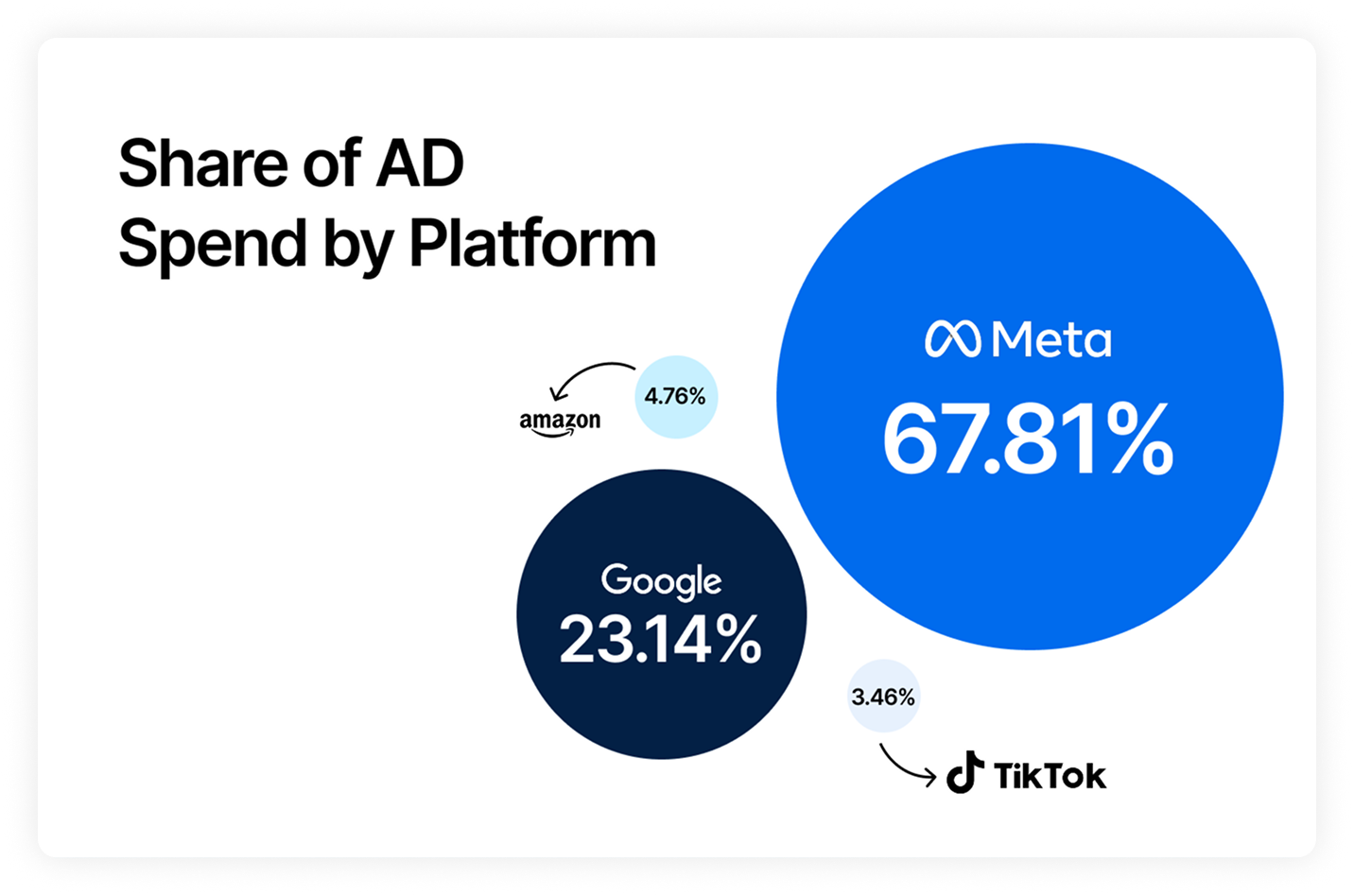
Body Copy: The following benchmarks compare advertising metrics from April 1-17 to the previous period. Considering President Trump first unveiled his tariffs on April 2, the timing corresponds with potential changes in advertising behavior among ecommerce brands (though it isn’t necessarily correlated).


 Moby AIAsk questions, analyze performance, and work with your business context.
 ActionsTake governed action across the tools that run your business.
 AutomationsSchedule recurring analysis and work that runs on your terms.
 Landing PagesCreative conversion-focused ecommerce pages with Moby.
 Creative StudioGenerate and refine creative grounded in your brand.






.webp)




.webp)

.webp)
