TikTok users in the United States experienced a rollercoaster of a weekend, with the platform shutting down late Saturday (January 18, 2025), a little earlier than when the ban was set to take effect on January 19. But by Sunday afternoon, a pop-up message thanking President Trump for his efforts to restore TikTok in the United States – a day before his inauguration – welcomed users back to the platform.
Trump has promised that the law which took effect on Sunday would have a 90-day extension if a viable sale of TikTok to American owners commenced. However, the extension for the ban would only be possible if the president certifies there are “legally binding documents” showing a divestiture is on the way.
TL;DR: It’s still really murky. And advertisers might be reasonably worried about investing in the platform that still has an uncertain future in the United States.
The power of TikTok for DTC brands
TikTok’s unique algorithm, massive user base, and viral potential have allowed many brands to grow their audience and drive revenue on the platform. In the United States, TikTok buyers have surged by 72.3%, with over 23.7 million users who actively make purchases through the app.
While TikTok has been successful for many brands, it is still just one platform. To prepare for this potential upheaval on TikTok, brands must tap into the data and watch performance across all platforms very closely.
In this article, we’ll discuss why brands should expand their ad spend across multiple platforms along with some TikTok alternatives, how brands can improve their marketing outside of TikTok, and what to do if the ban doesn’t survive the 90-day extension proposed by the Trump administration.
Number of brands advertising on TikTok has dropped in 2025
Our data shows that there has been a large drop in the number of Triple Whale brands advertising on TikTok through the beginning of the year. From the holiday peak in 2024 to mid-January 2025, there has been a 25% drop in the number of shops spending on TikTok daily.
It is likely that brands anticipated a ban and adjusted their budgets accordingly to take advantage of a “final” holiday season on the platform, then allocated their spend to platforms that aren’t experiencing any threats of being banned.
Pre-ban TikTok ad trends
Though the number of shops advertising on TikTok has dropped, the brands who’ve held steady remained committed to advertising on TikTok in the period leading up to the ban deadline. Ad spend only dropped by about 3% week-over-week for the brands that stayed with the platform.
Ad performance metrics for TikTok remained steady during the period before the ban, January 13-17th, as indicated in the table below:
Post-’ban’ TikTok ad trends
The temporary outage on January 18th definitely affected ad performance, as spend per shop decreased by more than 16% on January 18th and 19th (compared to the two days prior). However, after TikTok was restored, ad spend went right back to normal levels on January 20th.
TikTok ad performance over the weekend showed a large drop in conversion rate (-15.66%), likely due to advertisers running ads customers were unable to view when the outage occurred – before the expected date of January 19th.
Meta appears to have benefitted from the uncertainty of TikTok this past weekend, as ad spend on Facebook and Instagram was up +9.43% on January 18th and 19th, compared to the two days prior (January 16th-17th).
Why brands should diversify their ad spend
Relying heavily on one platform exposes a brand to significant risks, including algorithm changes, platform disruptions, or, in TikTok’s case, a straight-up ban. Diversification is critical to mitigating these risks and ensuring all marketing efforts remain resilient.
Here are some benefits to diversifying ad spend:
Risk mitigation. A ban or disruption on one platform won’t derail your entire marketing strategy.
Broader audience reach. Since different platforms attract unique demographics and behaviors, various ad platforms offer brands the opportunity to tailor campaigns to those specific audiences.
Enhanced campaign performance. By testing multiple platforms, brands are able to identify which channels deliver the best ROI, then allocate budgets accordingly.
Multi-channel messaging. A presence across platforms enhances brand visibility and credibility. Consumers encountering your brand in multiple spaces are more likely to trust and engage with it – because it’s familiar.
Agility in a volatile market. Nobody knows what will happen in the future – today, it’s TikTok on the chopping block. Tomorrow, it could be the next hot platform that will no longer meet the mark. Diversifying ad spend enables a brand to be nimble and adjust more easily to any foreseeable change.
How to reach customers on social platforms
If TikTok is fully banned, some platforms can offer similar features and opportunities to reach customers. Here are a few options:
Instagram reels
Similar to TikTok, Reels encourages short-form video
Continues to grow in popularity, and often creators cross-post the same content on TikTok as they do on Instagram Reels
Recently introduced an Affiliate Marketing Program, just in time to catch the American TikTok creators who may not be able to make money on the platform in the near future
While the algorithm isn’t the same as TikTok’s, Instagram still offers opportunities to reach audiences through interests and existing social connections
YouTube Shorts
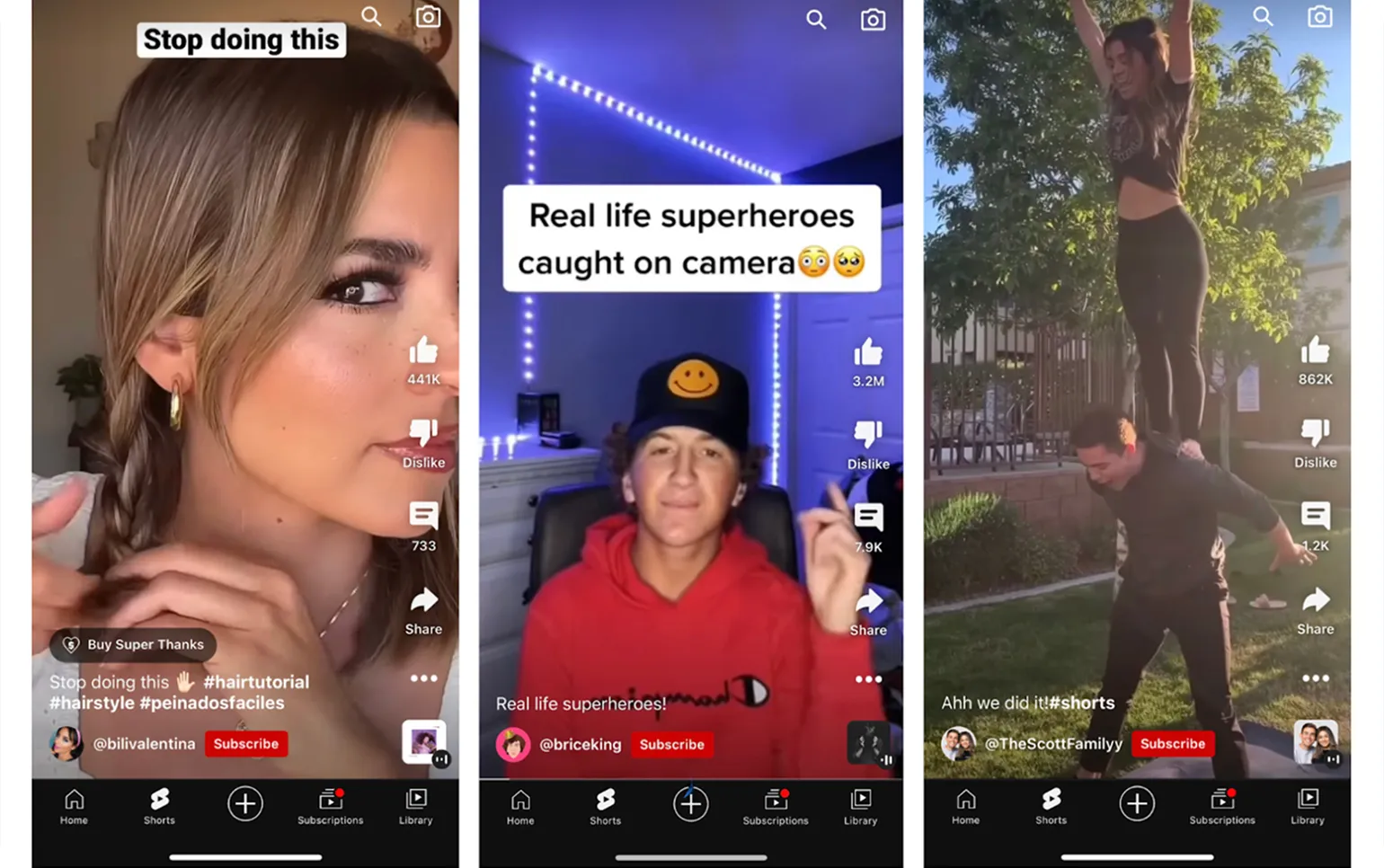
With a maximum length of 60 seconds, YouTube Shorts encourages quick and engaging content
Offers a range of creative tools and editing options to enhance videos, such as text overlays, captions, filters, and music
Advanced analytics, long-term content discoverability, and integration with broader YouTube channels are some benefits
Competes directly with TikTok for creators and brand collaborations
Snapchat
Niche targeting and creative ad formats are available, like AR lenses
Provides detailed audience segmentation ability to target viewers
Effective for engaging younger demographics through its short video format
Rednote emerges in TikTok’s wake
A looming ban for TikTok created a unique social experiment – without their beloved social network, where would users head next?
We polled our audience on LinkedIn to ask where they thought a TikTok ban might shift users, and 60% of respondents said an existing platform, whereas 33% thought TikTok users would shift to a new platform.
The TikTok ban was initially rooted in concerns about the Chinese government's use of the platform to obtain information on over 170 million American users. So, did users flock to existing American-owned apps like Facebook and Instagram where their data is presumably more secure? Of course not. Instead, they downloaded other Chinese-owned apps that likely have the same security risks as TikTok.
As of this writing, the top free app on both the Apple App Store and Android App Store in the United States is Rednote, a Chinese-owned app known for its short-form content.
Americans have even been learning Mandarin in anticipation of making the full switch to Rednote, as reported by Duolingo.
Lemon8’s short-lived popularity spike
Another app that gained several self-proclaimed “TikTok refugees” last week was Lemon8, an app that blends the features of Instagram and Pinterest. As a photo-first platform, it is better suited to lifestyle content like fashion, makeup, skincare, and travel.
Lemon8 had just over 1 million daily active users in the United States, and 12.5 million global monthly active users in December. However, since it is also a ByteDance-owned platform, it is affected by the same ban as TikTok. As of January 20th, it appears to have been removed from both the Apple App Store and Android App Store.
It is unclear why TikTok is safe to operate, but ByteDance-owned Lemon8 seems to have ceased operations in the United States, much to the chagrin of dedicated users.
While all of this social media drama has us reaching for the popcorn, if you’re a marketer you should be dialed-in to how to market your product outside of platforms which may or may not exist tomorrow.
How to improve marketing outside of TikTok
To ensure long-term success, DTC brands should focus on strategies that enhance customer engagement across all channels. Here are a few actionable steps:
Leverage first-party data: Use customer insights to personalize email campaigns and create targeted ads on other platforms.
Explore influencer partnerships: Collaborate with creators who have a strong presence on Instagram or YouTube as an alternative.
Use tools like Triple Whale: With real-time insights into campaign performance, brands can identify which platforms yield the best ROI. Triple Whale’s dashboard can consolidate data across platforms for better budget allocation and strategic pivots.
Repurpose content: Adapt existing TikTok content for Instagram Reels, YouTube Shorts, or other video-focused platforms.
How brands can prepare for a TikTok ban
Even though TikTok is alive for now, brands should ensure they’re ready should the government happen to lay the hammer. Here are seven tactics to employ so you’re prepared for a possible TikTok-less future.
Download existing TikTok content and insights. This information will be key for future reference.
Pause ad spend. A ban would prevent new TikTok user downloads and app updates. Investing in an uncertain platform is risky.
Follow the creators and audiences. As influencers and users flock to new platforms, consider setting up shop there.
Prepare proactive messaging for your audience. Introduce any new accounts and communicate your commitment to building relationships and community in these other channels.
Repurpose TikTok content in other campaigns. Ensure your brand voice remains consistent across channels.
Review any active TikTok influencer contracts. Give influencers/creators permission to use the content on other platforms.
Utilize your owned data. Create better audiences to target on other platforms (for example, create lookalike audiences to target on FB/Instagram from your existing customers)
Follow the creators. If the most popular influencers make a home on other apps, it makes sense to at least give it a shot.
Ultimately, brands that have been successful on TikTok will follow creators wherever they go, along with their audiences. Beauty brand BK Beauty said approximately 25% of their 2024 revenue came from TikTok Shop, with other channels experiencing a halo effect boost from their TikTok influencer marketing.
Will BK Beauty be taking a wild ride on Rednote in the future? Only time will tell.
For now, Rednote lacks mature ad infrastructure, and it’s unlikely brands will invest a significant amount of their ad budget on the platform.
Conclusion
The confusion and chaos around TikTok’s ban serves as a reminder that things can change quickly, and brands should make sure they're prepared for anything that may happen. As new platforms emerge, brands can ensure they’re accurately monitoring their performance across all ad channels using tools like Triple Whale. Whether the TikTok ban will be enacted remains to be seen, but being prepared and agile as a brand means you’ll be one step ahead of the game.
Component Sales
5.32K
Benchmark your ecommerce brand against industry leaders
TikTok users in the United States experienced a rollercoaster of a weekend, with the platform shutting down late Saturday (January 18, 2025), a little earlier than when the ban was set to take effect on January 19. But by Sunday afternoon, a pop-up message thanking President Trump for his efforts to restore TikTok in the United States – a day before his inauguration – welcomed users back to the platform.
Trump has promised that the law which took effect on Sunday would have a 90-day extension if a viable sale of TikTok to American owners commenced. However, the extension for the ban would only be possible if the president certifies there are “legally binding documents” showing a divestiture is on the way.
TL;DR: It’s still really murky. And advertisers might be reasonably worried about investing in the platform that still has an uncertain future in the United States.
The power of TikTok for DTC brands
TikTok’s unique algorithm, massive user base, and viral potential have allowed many brands to grow their audience and drive revenue on the platform. In the United States, TikTok buyers have surged by 72.3%, with over 23.7 million users who actively make purchases through the app.
While TikTok has been successful for many brands, it is still just one platform. To prepare for this potential upheaval on TikTok, brands must tap into the data and watch performance across all platforms very closely.
In this article, we’ll discuss why brands should expand their ad spend across multiple platforms along with some TikTok alternatives, how brands can improve their marketing outside of TikTok, and what to do if the ban doesn’t survive the 90-day extension proposed by the Trump administration.
Number of brands advertising on TikTok has dropped in 2025
Our data shows that there has been a large drop in the number of Triple Whale brands advertising on TikTok through the beginning of the year. From the holiday peak in 2024 to mid-January 2025, there has been a 25% drop in the number of shops spending on TikTok daily.
It is likely that brands anticipated a ban and adjusted their budgets accordingly to take advantage of a “final” holiday season on the platform, then allocated their spend to platforms that aren’t experiencing any threats of being banned.
Pre-ban TikTok ad trends
Though the number of shops advertising on TikTok has dropped, the brands who’ve held steady remained committed to advertising on TikTok in the period leading up to the ban deadline. Ad spend only dropped by about 3% week-over-week for the brands that stayed with the platform.
Ad performance metrics for TikTok remained steady during the period before the ban, January 13-17th, as indicated in the table below:
Post-’ban’ TikTok ad trends
The temporary outage on January 18th definitely affected ad performance, as spend per shop decreased by more than 16% on January 18th and 19th (compared to the two days prior). However, after TikTok was restored, ad spend went right back to normal levels on January 20th.
TikTok ad performance over the weekend showed a large drop in conversion rate (-15.66%), likely due to advertisers running ads customers were unable to view when the outage occurred – before the expected date of January 19th.
Meta appears to have benefitted from the uncertainty of TikTok this past weekend, as ad spend on Facebook and Instagram was up +9.43% on January 18th and 19th, compared to the two days prior (January 16th-17th).
Why brands should diversify their ad spend
Relying heavily on one platform exposes a brand to significant risks, including algorithm changes, platform disruptions, or, in TikTok’s case, a straight-up ban. Diversification is critical to mitigating these risks and ensuring all marketing efforts remain resilient.
Here are some benefits to diversifying ad spend:
Risk mitigation. A ban or disruption on one platform won’t derail your entire marketing strategy.
Broader audience reach. Since different platforms attract unique demographics and behaviors, various ad platforms offer brands the opportunity to tailor campaigns to those specific audiences.
Enhanced campaign performance. By testing multiple platforms, brands are able to identify which channels deliver the best ROI, then allocate budgets accordingly.
Multi-channel messaging. A presence across platforms enhances brand visibility and credibility. Consumers encountering your brand in multiple spaces are more likely to trust and engage with it – because it’s familiar.
Agility in a volatile market. Nobody knows what will happen in the future – today, it’s TikTok on the chopping block. Tomorrow, it could be the next hot platform that will no longer meet the mark. Diversifying ad spend enables a brand to be nimble and adjust more easily to any foreseeable change.
How to reach customers on social platforms
If TikTok is fully banned, some platforms can offer similar features and opportunities to reach customers. Here are a few options:
Instagram reels
Similar to TikTok, Reels encourages short-form video
Continues to grow in popularity, and often creators cross-post the same content on TikTok as they do on Instagram Reels
Recently introduced an Affiliate Marketing Program, just in time to catch the American TikTok creators who may not be able to make money on the platform in the near future
While the algorithm isn’t the same as TikTok’s, Instagram still offers opportunities to reach audiences through interests and existing social connections
YouTube Shorts
With a maximum length of 60 seconds, YouTube Shorts encourages quick and engaging content
Offers a range of creative tools and editing options to enhance videos, such as text overlays, captions, filters, and music
Advanced analytics, long-term content discoverability, and integration with broader YouTube channels are some benefits
Competes directly with TikTok for creators and brand collaborations
Snapchat
Niche targeting and creative ad formats are available, like AR lenses
Provides detailed audience segmentation ability to target viewers
Effective for engaging younger demographics through its short video format
Rednote emerges in TikTok’s wake
A looming ban for TikTok created a unique social experiment – without their beloved social network, where would users head next?
We polled our audience on LinkedIn to ask where they thought a TikTok ban might shift users, and 60% of respondents said an existing platform, whereas 33% thought TikTok users would shift to a new platform.
The TikTok ban was initially rooted in concerns about the Chinese government's use of the platform to obtain information on over 170 million American users. So, did users flock to existing American-owned apps like Facebook and Instagram where their data is presumably more secure? Of course not. Instead, they downloaded other Chinese-owned apps that likely have the same security risks as TikTok.
As of this writing, the top free app on both the Apple App Store and Android App Store in the United States is Rednote, a Chinese-owned app known for its short-form content.
Americans have even been learning Mandarin in anticipation of making the full switch to Rednote, as reported by Duolingo.
Lemon8’s short-lived popularity spike
Another app that gained several self-proclaimed “TikTok refugees” last week was Lemon8, an app that blends the features of Instagram and Pinterest. As a photo-first platform, it is better suited to lifestyle content like fashion, makeup, skincare, and travel.
Lemon8 had just over 1 million daily active users in the United States, and 12.5 million global monthly active users in December. However, since it is also a ByteDance-owned platform, it is affected by the same ban as TikTok. As of January 20th, it appears to have been removed from both the Apple App Store and Android App Store.
It is unclear why TikTok is safe to operate, but ByteDance-owned Lemon8 seems to have ceased operations in the United States, much to the chagrin of dedicated users.
While all of this social media drama has us reaching for the popcorn, if you’re a marketer you should be dialed-in to how to market your product outside of platforms which may or may not exist tomorrow.
How to improve marketing outside of TikTok
To ensure long-term success, DTC brands should focus on strategies that enhance customer engagement across all channels. Here are a few actionable steps:
Leverage first-party data: Use customer insights to personalize email campaigns and create targeted ads on other platforms.
Explore influencer partnerships: Collaborate with creators who have a strong presence on Instagram or YouTube as an alternative.
Use tools like Triple Whale: With real-time insights into campaign performance, brands can identify which platforms yield the best ROI. Triple Whale’s dashboard can consolidate data across platforms for better budget allocation and strategic pivots.
Repurpose content: Adapt existing TikTok content for Instagram Reels, YouTube Shorts, or other video-focused platforms.
How brands can prepare for a TikTok ban
Even though TikTok is alive for now, brands should ensure they’re ready should the government happen to lay the hammer. Here are seven tactics to employ so you’re prepared for a possible TikTok-less future.
Download existing TikTok content and insights. This information will be key for future reference.
Pause ad spend. A ban would prevent new TikTok user downloads and app updates. Investing in an uncertain platform is risky.
Follow the creators and audiences. As influencers and users flock to new platforms, consider setting up shop there.
Prepare proactive messaging for your audience. Introduce any new accounts and communicate your commitment to building relationships and community in these other channels.
Repurpose TikTok content in other campaigns. Ensure your brand voice remains consistent across channels.
Review any active TikTok influencer contracts. Give influencers/creators permission to use the content on other platforms.
Utilize your owned data. Create better audiences to target on other platforms (for example, create lookalike audiences to target on FB/Instagram from your existing customers)
Follow the creators. If the most popular influencers make a home on other apps, it makes sense to at least give it a shot.
Ultimately, brands that have been successful on TikTok will follow creators wherever they go, along with their audiences. Beauty brand BK Beauty said approximately 25% of their 2024 revenue came from TikTok Shop, with other channels experiencing a halo effect boost from their TikTok influencer marketing.
Will BK Beauty be taking a wild ride on Rednote in the future? Only time will tell.
For now, Rednote lacks mature ad infrastructure, and it’s unlikely brands will invest a significant amount of their ad budget on the platform.
Conclusion
The confusion and chaos around TikTok’s ban serves as a reminder that things can change quickly, and brands should make sure they're prepared for anything that may happen. As new platforms emerge, brands can ensure they’re accurately monitoring their performance across all ad channels using tools like Triple Whale. Whether the TikTok ban will be enacted remains to be seen, but being prepared and agile as a brand means you’ll be one step ahead of the game.
Share
Allie Mistakidis
Allie Mistakidis is a Content Writer at Triple Whale, silversmith at Aloraflora Jewelry, and retail store co-owner at Whiskeyjack Boutique in Windsor, ON, Canada. She has a Masters degree in plumage evolution in birds, and spent several years doing technical support, including at Shopify. You can connect with her on LinkedIn.
Body Copy: The following benchmarks compare advertising metrics from April 1-17 to the previous period. Considering President Trump first unveiled his tariffs on April 2, the timing corresponds with potential changes in advertising behavior among ecommerce brands (though it isn’t necessarily correlated).


 Moby AIAsk questions, analyze performance, and work with your business context.
 ActionsTake governed action across the tools that run your business.
 AutomationsSchedule recurring analysis and work that runs on your terms.
 Landing PagesCreative conversion-focused ecommerce pages with Moby.
 Creative StudioGenerate and refine creative grounded in your brand.


.webp)













.webp)

.webp)
