The final holiday gifting period is where your year-long efforts either pay off spectacularly or get lost in the noise. The most common strategic mistake brands make (that can cost them dearly) is thinking this period requires a fixed budget model.
It doesn't.
Winning BFCM requires an act of strategic mastery: You must become fluent in the pendulum that swings your capital to match the customer's mindset.
Successful advertisers are now pivoting from BFCM acquisition to late-stage conversion and aggressively scaling up to the final shipping deadline.
Below are three key shifts that will help you win the final stretch.
The Power of Priming: Making Every Awareness Dollar Count
While customers move fluidly between searching, streaming, and scrolling, exploration must be directed toward high-intent action during BFCM. You've invested well in branding all year. So, early December is not the time for building new cold lists; it's the time for surgical conversion of BFCM visitors.
Every dollar in the upper funnel must be dedicated to one single goal: re-engaging the high-intent audience lists captured during BFCM.
Channels like YouTube and Demand Gen expand your pool of prospective buyers, driving sales from users who are not actively searching for you yet.
Google recently observed a clear investment threshold for full-funnel advertisers: when advertisers allocated at least 8% of their Search, PMax, or Shopping budget to Demand Gen campaigns, they saw an average 5% decrease in overall Account CPA.
Tip #1: Focus your YouTube and Demand Gen spend on retargeting non-purchasing BFCM site visitors with a heavy push on limited-time shipping or e-gift card solutions. Your final, high-intent campaigns can now be primed with an engaged audience, not wasted on cold traffic.
The Profit Mandate: Segmenting for New Customer Value
When the customer mindset shifts to action — searching for deals and seeking validation — the budget pendulum must swing with calculated, surgical aggression into low-funnel capture channels to maximize profit from late-stage gift-givers.
But, failure to filter high-volume spend by customer value erodes long-term profitability.
The key to unlocking higher conversion value from your lower funnel campaigns is to follow a strong NCA strategy (Search + PMax + Demand Gen).
Heavys, for example, implemented Google’s full NCA strategy (Search + PMax + Demand Gen) and saw a +182% rise in new customer revenue compared to the pre-experiment period. nROAS also increased from 2.29 to 4.97 on PMax.
Along the same lines, True Classic Tees proved the efficiency of core channels: PMax with NCA best practices drove an 11% increase in new customer revenue and achieved a 28% decrease in new customer acquisition cost (nCAC).
Tip #2: Implement dedicated NCA campaigns in PMax. Systematically exclude existing customers via Customer Match lists and set the New Customer Value to at least 2x AOV. This maximizes long-term value from the peak demand surge.
Tip #3: Expand Broad Match coverage on Search for your products to expand reach and search-discoverability during BFCM.
The Moment of Truth: Capturing Peak Demand with Data Confidence
The final shipping deadline creates an urgency surge too fast for slow reporting. Holding onto rigid platform ROAS targets that don't account for the true efficiency of high-intent channels during the peak can be a very costly mistake.
The execution of this budget pivot requires surgical precision powered by the AI tools that connect real-time data to bidding signals.
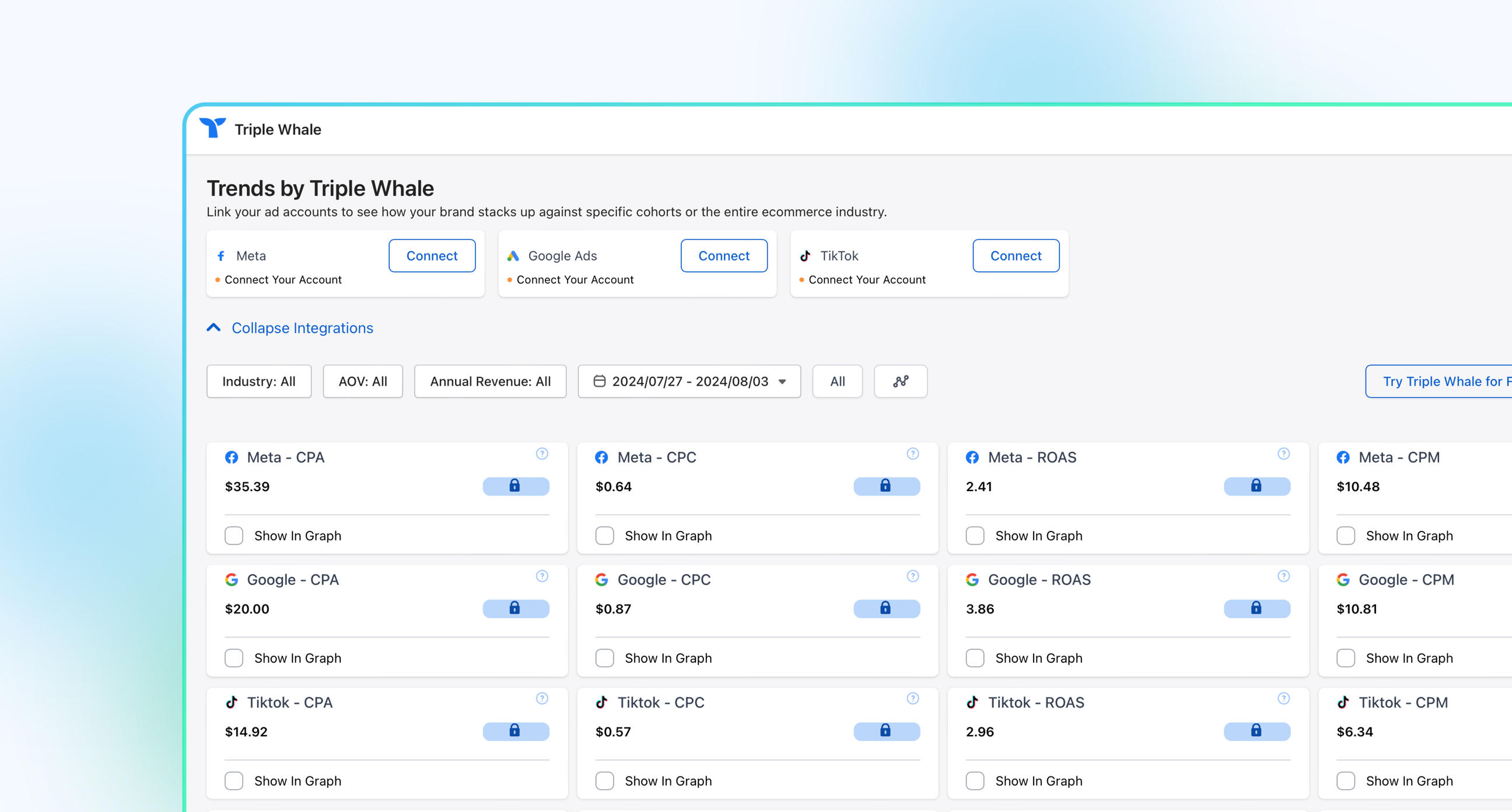
Search, Shopping, and PMax become more efficient during high intent periods. Triple Whale analysis reveals that Google’s Search and PMax channels drive 56% more attributed conversions than the platform-reported data. The true conversion credit is higher than what you see on the platform!
A recent Google analysis of 80+ causal impact studies found an increase in C12'24 spend drove a 27% uplift in purchases, overachieving efficiency goals by 22% and outpacing category search growth by 90% across top categories.
Tip #4: Implement phased ROAS targets. Relax them for the 48-72 hours leading up to the final shipping deadline. Immediately tighten or pivot them post-deadline to push onlye-gift cards.
Tip #5 : Wondering which keywords are draining your spend? Our Keyword-Level Attribution ensures that a massive budget increase is spent on the exact search terms that drive the highest conversions and revenue in real-time. This provides the control needed to deploy capital with confidence (while competitors are spending blindly).
Your Go-To-Market Checklist: 3 Steps to Seize BFCM
1. Utilize the BFCM Audience: Dedicate upper-funnel budget to converting the high-value, segmented customer lists.
Primary channels include: YouTube Retargeting, Demand Gen Retargeting, Customer Match Exclusions.
2. Validate the Swing: Use real-time attribution data to justify relaxing ROAS targets and aggressively increasing bids.
Primary channels include: Triple Whale Data, Google AI Bidding.
3. Execute for Profit: Filter massive scale through an NCA strategy to ensure new customer acquisition and maximum long-term value.
Primary channels include: Search, PMax NCA Campaigns, Keyword-Level Attribution.
The question for every brand aspiring to elite status isn't whether they should adjust their budget, but whether they have built the strategic infrastructure that allows them to execute this plan with zero hesitation.
Stop debating fixed models. Fully embrace the strategic pendulum, trust the data, and ensure your promotions become a competitive weapon rather than a margin destroyer this holiday season.


 Moby AIAsk questions, analyze performance, and work with your business context.
 ActionsTake governed action across the tools that run your business.
 AutomationsSchedule recurring analysis and work that runs on your terms.
 Landing PagesCreative conversion-focused ecommerce pages with Moby.
 Creative StudioGenerate and refine creative grounded in your brand.




.webp)




.webp)

.webp)
