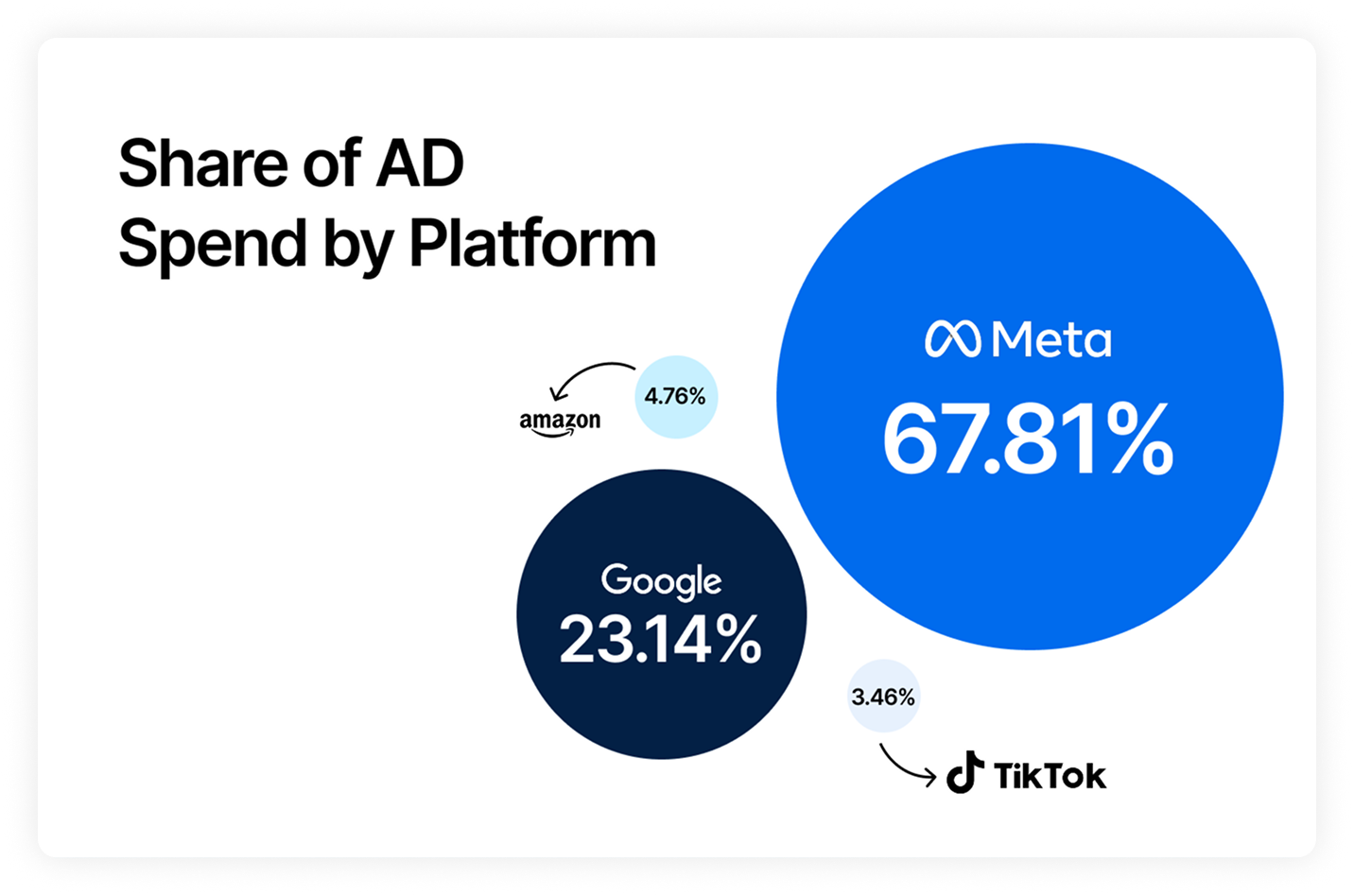
AI-driven attribution models reshape how conversions are counted, and your data no longer tells the whole story. The core problem is rampant because AI attribution models from platforms like Google and Meta claim more credit for sales, leaving your SEO and organic channels weak, especially if you’re running a Shopify or e-commerce store.
Your marketing dashboards distort SEO data, leaving gaps that can cost real money. With fragmented data, making critical decisions without the whole picture is easy. Triple Whale addresses this challenge by unifying data streams and cutting through the AI fog.
And this isn't an accident, LLMs and AI-driven attribution models actively reshape how conversions are counted, often at the expense of organic search. With Google's Search Generative Experience (SGE) providing direct answers on the search results page, organic clicks and impressions are plummeting. Your content might be the source, but your site isn't getting the traffic or the vital attribution credit for the sale.
To make matters worse, recent Google updates limit the search results returned for specific queries, giving traditional rank trackers an incomplete view of your performance. This makes it nearly impossible to prove the value of some SEO efforts.
These systems, including GA4's attribution settings and Meta's conversion modelling, increasingly reward the last high-intent click, often a paid ad. This undervalues the organic search visit that first introduced the customer to your brand and is the fundamental Shopify attribution problem.
For e-commerce businesses, this distortion leads to SEO's impact appearing far smaller than it is, leaving marketing teams without a clear explanation for the changes. Organic discovery might even get miscategorised as direct traffic without explanation, so proper SEO optimisation is key before auditing your data.
Why Doesn’t Shopify Data Match GA4, Meta, and Search Console?
Your data doesn't match because each platform uses different rules to count conversions, often biased toward its own ecosystem. Understanding these differences is the first step to making sense of your data.
- Shopify’s Data is a clean record of what's sold, but a black box for attribution. The Shopify attribution problem tells you what was sold, but not why or which channels led to the sale.
- GA4’s Data: Its data-driven model distributes credit, but Google's ecosystem influences its AI. This often gives more credit to high-intent, last-click interactions, which are frequently paid ads, at the expense of the organic search visit that first introduced the customer to your brand.
- Search Console’s Data: This tool measures visibility and clicks, not conversions. Its numbers will naturally look different from your sales data because it measures SEO performance, not e-commerce revenue.
- Meta's Data: By default, Meta uses a 7-day click or 1-day view window, often overcrediting ads for conversions that might have happened anyway. Meta now also offers an incremental model, which tries to isolate conversions actually caused by ads using statistical modelling. This gives a truer view of lift, but is still ultimately Meta’s interpretation of impact.
AI Attribution Tools for Shopify: Triple Whale’s Approach
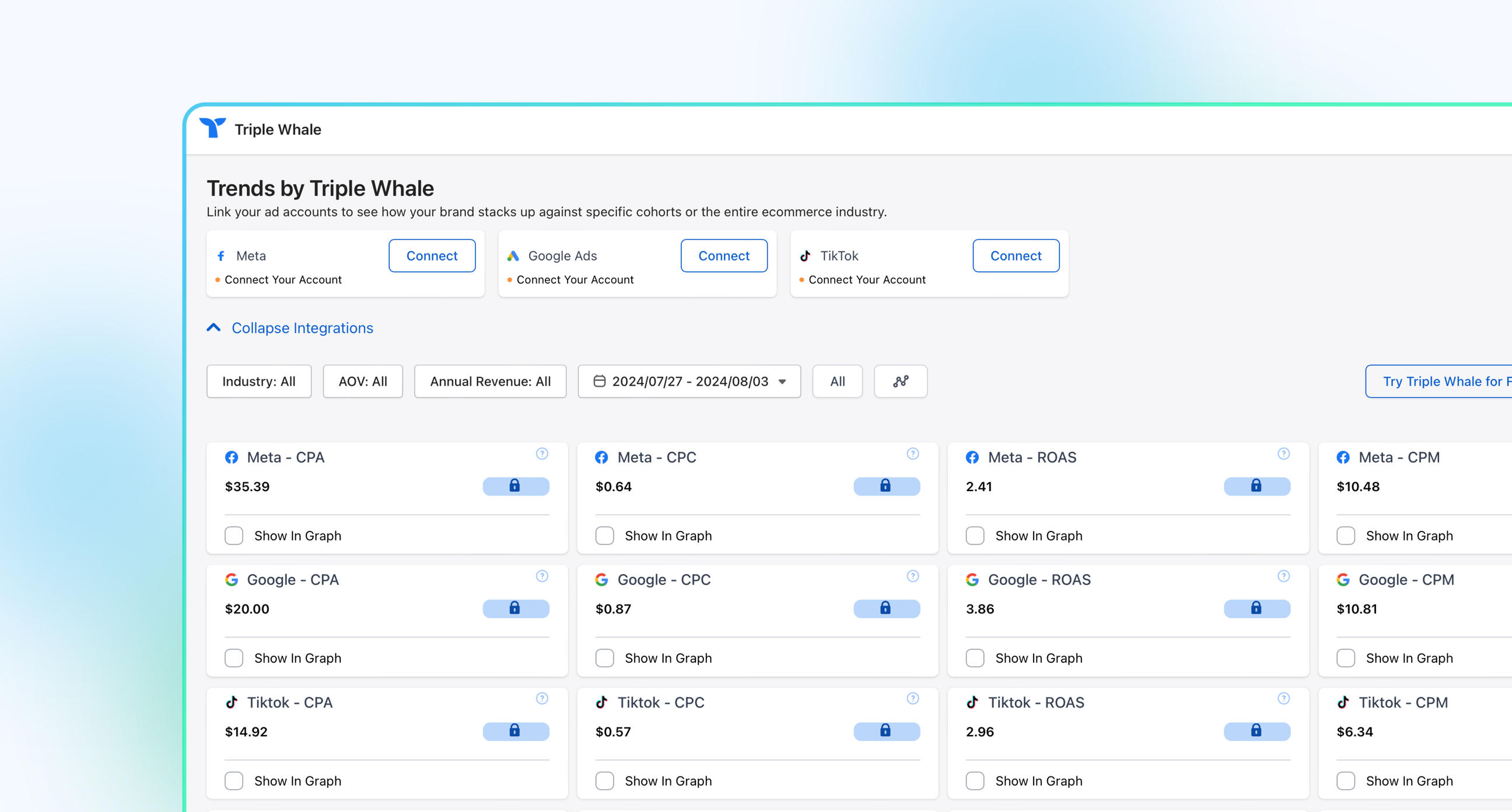
Triple Whale doesn't just centralise your data; it transforms it into a powerful, unified view that overcomes the limitations of other platforms. It pulls data from multiple sources, such as Shopify, advertising platforms, email marketing, and customer lifetime value, into a single, real-time dashboard. This makes spotting patterns and trends across channels easy — see G2.
The platform offers multiple attribution options, from simple first-click and last-click models to the more advanced Total Impact Model. This flexibility allows brands to choose an approach that best fits their campaign goals and sales cycles. This model stands out because it uses AI to analyse every customer touchpoint, assigning credit algorithmically based on real user journeys. This ensures that you're not just rewarding the last click, but understanding the true synergy of your marketing efforts.
The New Era of Reporting: It's Not a Dashboard, It's An AI Team
In the age of AI, a static dashboard is no longer enough. Data is messy, channels are fragmented, and marketers are drowning in spreadsheets. Triple Whale solves this by centralising data and introducing a powerful new class of AI tools that act as an extension of your team. This is about moving from simple reporting to proactive, automated intelligence.
This is where Moby, Triple Whale's AI, comes in. Think of Moby as a senior marketing analyst who never sleeps and knows your data inside out. They operate on a proprietary data infrastructure that processes over $55 billion in e-commerce transactions from more than 50,000 brands, providing them with the context to offer insights that would be impossible for a human to find manually.
Moby LLM: Your Embedded Analyst
Gone are the days of exporting reports and trying to find answers in a sea of data. Moby acts as a sophisticated, embedded data analyst with whom you can interact directly in the dashboard. Moby Chat lets you ask complex business questions in natural language and receive instant, actionable insights.
Here are a few real-world examples:
- "Why did my Facebook ROAS drop 20% last week?" Moby identifies specific ad sets, creatives, or audience changes that caused the decline, providing a clear explanation.
- "Which of my creatives are showing fatigue?" Moby provides a visual analysis of ad performance with recommendations for refresh timing, helping you optimise your creative strategy.
- "Forecast my revenue for the next 30 days." Moby provides AI-powered projections with confidence intervals and scenario planning, giving you a clear financial outlook.
- "Show me all customers from California who spent over $500 in the last 30 days." Moby instantly generates a segmented list with behavioural insights, allowing for more targeted marketing campaigns.
Moby's ability to provide these deep, data-backed answers in real time shifts the focus from manual analysis to strategic action, making complex data accessible to any marketer.
Moby Agents: Proactive Business Intelligence
Beyond answering direct queries, Triple Whale also utilises AI agents that operate proactively in the background. These autonomous bots monitor key metrics like marketing, inventory, and retention to detect anomalies, forecast outcomes, and send timely alerts.
A powerful example is how an Agent helped LSKD detect a $100K scam from an affiliate campaign by spotting unusual traffic patterns and attribution anomalies that would have been nearly impossible to catch manually.
Sonar: Powering Smarter Actions
Triple Whale’s intelligence goes beyond reporting. The Sonar suite captures crucial data that other tools miss, which powers smarter actions across your business - plus we made it as easy as possible to set up, with tools made directly for you:
- Sonar Send for Klaviyo works in real-time, capturing micro-moments of high purchase intent to send triggered emails like abandoned cart or browse abandonment campaigns. This results in typical merchants seeing a 15-25% uplift in cart recovery revenue compared to the delays of traditional batch processing.
- Sonar Optimize eliminates wasted ad spend by suppressing ads the moment a purchase occurs and shifting budget to complementary offers (upsells, cross-sells) with data enrichment features. This helps avoid the standard “ads to buyers” mismatch that many platforms struggle with.
In fact, one brand noted that Sonar Send delivers 10x ROI return on investment compared to the cost of Triple Whale’s subscription, effectively making the platform pay for itself. Real-world results back this up: Paw.com, after integrating Sonar into its existing Klaviyo flows, achieved a 14.2% increase in incremental revenue.
Think of Sonar Send as your brand’s sixth sense. It captures signals traditional tools miss, feeding Klaviyo and ad platforms with richer data. The result? Smarter flows, fewer wasted impressions, and a system designed to drive revenue, not just report on it.
Reporting That Actually Drives Results
Triple Whale's reporting is superior to traditional platforms because it's built to overcome the biases and fragmentation of the modern marketing landscape. Instead of siloed reports, Triple Whale unifies all your data into a single source of truth.
Its AI transforms raw numbers into clear, actionable insights and its agents can analyse creative, suggest budget allocations, and forecast performance, giving you a clear path forward. This shifts the focus from "what happened" to "what should I do next?" This ability to interpret and present complex data is a key feature, as Martech Series noted.
When & Why Triple Whale Is Your Best Move To Monitor AI Data
Triple Whale delivers the most value for Shopify-based, multi-channel e-commerce brands with significant sales volume and complex customer journeys. It is particularly effective for companies generating over ten million dollars annually, where long consideration periods and multiple touchpoints make accurate attribution critical. In these environments, minor improvements in attribution accuracy can translate into millions in recovered or reallocated ad spend.
It is also a strong fit for marketing teams that need actionable insights rather than raw, siloed numbers. Teams prepared to adjust campaigns, shift budgets, and test new creative based on performance trends will see the fastest return on investment.
Real results highlight its impact:
- Cozy Earth scaled its Facebook Dynamic Ads campaign 9.5x after using Triple Whale to identify high-performing platforms and remove wasted spend.
- Ampersand saw its Meta Pixel ROAS climb from around 3 to 4.8, with a 111% increase in conversion value and an 80% rise in new customer purchases.
- An early adopter brand exceeded its largest single sales day by two hundred thousand dollars after acting on recommendations from Moby Agents.
How to Fix SEO Attribution in the Age of AI
Attribution will never be perfect, but for Shopify brands operating across multiple channels, the gap between what drives sales and what the reports show is widening. In a world where AI-driven models increasingly decide which channels get credit, your SEO and other early-stage touchpoints are often left undervalued.
Triple Whale allows you to reclaim clarity in the attribution fog; combining first-party tracking, post-purchase surveys, and flexible attribution models in one dashboard creates a more accurate view of how each channel contributes to revenue.
Adding AI-powered tools, like Moby Chat and Moby Agents, means your team can move from insight to action without the delays and guesswork of juggling multiple disconnected reports. Your data shouldn't be a puzzle in a world where AI changes attribution rules.
It should be your greatest asset. Ready to see the whole picture? Book a Triple Whale demo today!


 Moby AIAsk questions, analyze performance, and work with your business context.
 ActionsTake governed action across the tools that run your business.
 AutomationsSchedule recurring analysis and work that runs on your terms.
 Landing PagesCreative conversion-focused ecommerce pages with Moby.
 Creative StudioGenerate and refine creative grounded in your brand.










.webp)

.webp)
